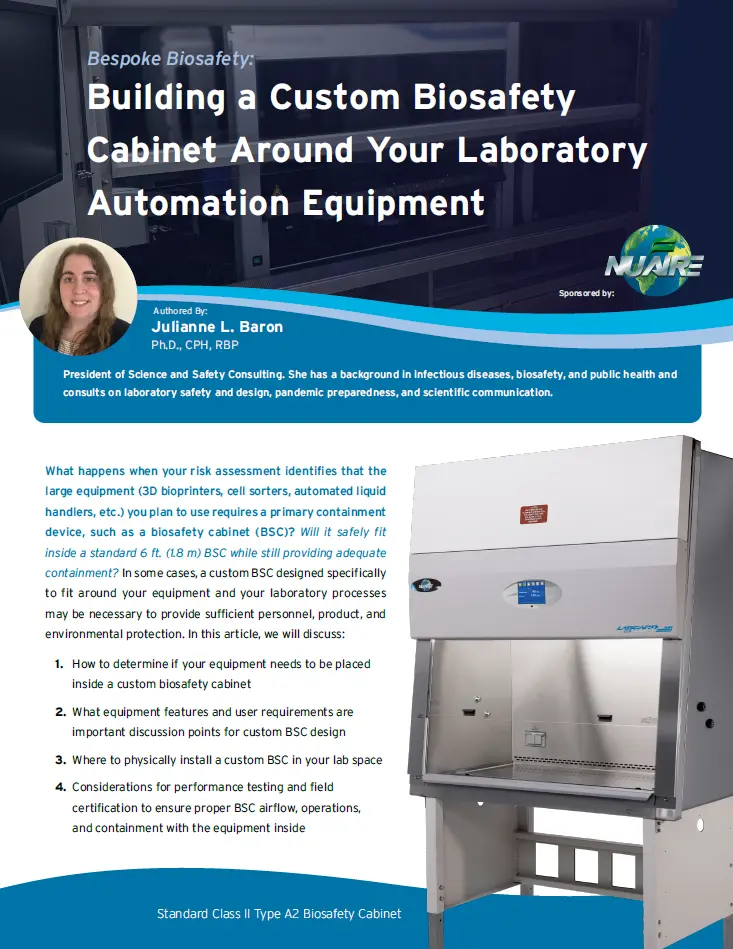
The Key Decisions That Define Biosafety Cabinet Performance

From risk assessment to installation, thoughtful BSC selection and configuration ensure safety and efficiency
iStock, Vladislav Stepanov

iStock, Murat Photo

In the laboratory, biosafety cabinets (BSCs) are central to protecting people, the environment, and sometimes products, but their impact goes beyond containment. Decisions surrounding selection, configuration, and installation can influence day-to-day efficiency, staff comfort, and the overall quality of research. When these choices are overlooked or rushed, outcomes can range from reduced productivity to compromised safety and costly retrofits. Because BSCs must align with both safety standards and the unique needs of each lab—whether that involves specific workflows, equipment integration, or installation constraints—careful planning is essential. By understanding these factors, lab managers can ensure their biosafety cabinets deliver reliable containment and maintain consistent performance over time.

The role of risk assessment

A risk assessment evaluates the probability and severity of exposure to hazardous materials, guiding the selection of appropriate controls to protect personnel, products, and the environment. By examining the materials being handled, the experimental procedures performed, and the conditions under which work occurs, lab managers can determine the level of protection required and identify the appropriate control measures. Effective risk assessments are iterative, evolving as workflows change and new information becomes available.

To translate assessment findings into practical safeguards, lab managers can turn to the hierarchy of controls, which ranks controls from most to least effective.

Select below to learn more

Elimination

Elimination is the most effective control measure, as it removes the hazard entirely and prevents any possibility of exposure. In laboratory environments, however, hazardous materials or processes often cannot be removed without fundamentally changing the work being performed. 

Although uncommon, elimination should always be considered first during a risk assessment.

Substitution

Substitution involves replacing a hazardous agent or process with a less hazardous alternative and is most effective when it reduces both the likelihood and the severity of exposure. Examples include selecting a non-pathogenic strain or switching to a less reactive chemical. 

This control can greatly reduce risk, but it requires careful evaluation to ensure the substitute doesn’t introduce new hazards.

Engineering controls

Engineering controls are any modification to equipment, facilities, or processes that minimize the hazard. They don’t rely on individual behavior, making them more dependable than administrative practices or personal protective equipment.

BSCs are among the most widely used engineering controls in biological laboratories. They protect personnel, the environment, and sometimes products by controlling airflow, filtering contaminants, and containing aerosols.

Engineering controls must be selected based on the risks identified during assessment and installed, maintained, and certified correctly to perform as intended.

Administrative controls

Administrative controls reduce risk by shaping how work is performed. These measures rely on policies, training, and procedural changes that guide human behavior toward safer practices. Examples include standard operating procedures, biosafety training programs, incident reporting systems, and scheduling high-risk procedures during quieter periods.

Their effectiveness depends on compliance, clarity, and reinforcement. Regular review of policies is critical for keeping these controls aligned with actual laboratory practices.

Personal protective equipment

Personal protective equipment (PPE) limits exposure to a hazard. Effective use depends on proper selection, fit, training, and consistent application. Gloves, for example, must be compatible with the chemicals being used, while respirators may require a fit test.

Because PPE depends heavily on user behavior, it is considered the least reliable control. However, it remains an essential part of a layered safety approach and is often used in combination with other protective measures.

When considering BSCs as an engineering control, lab managers must understand the differences and limitations of the different classes and types.
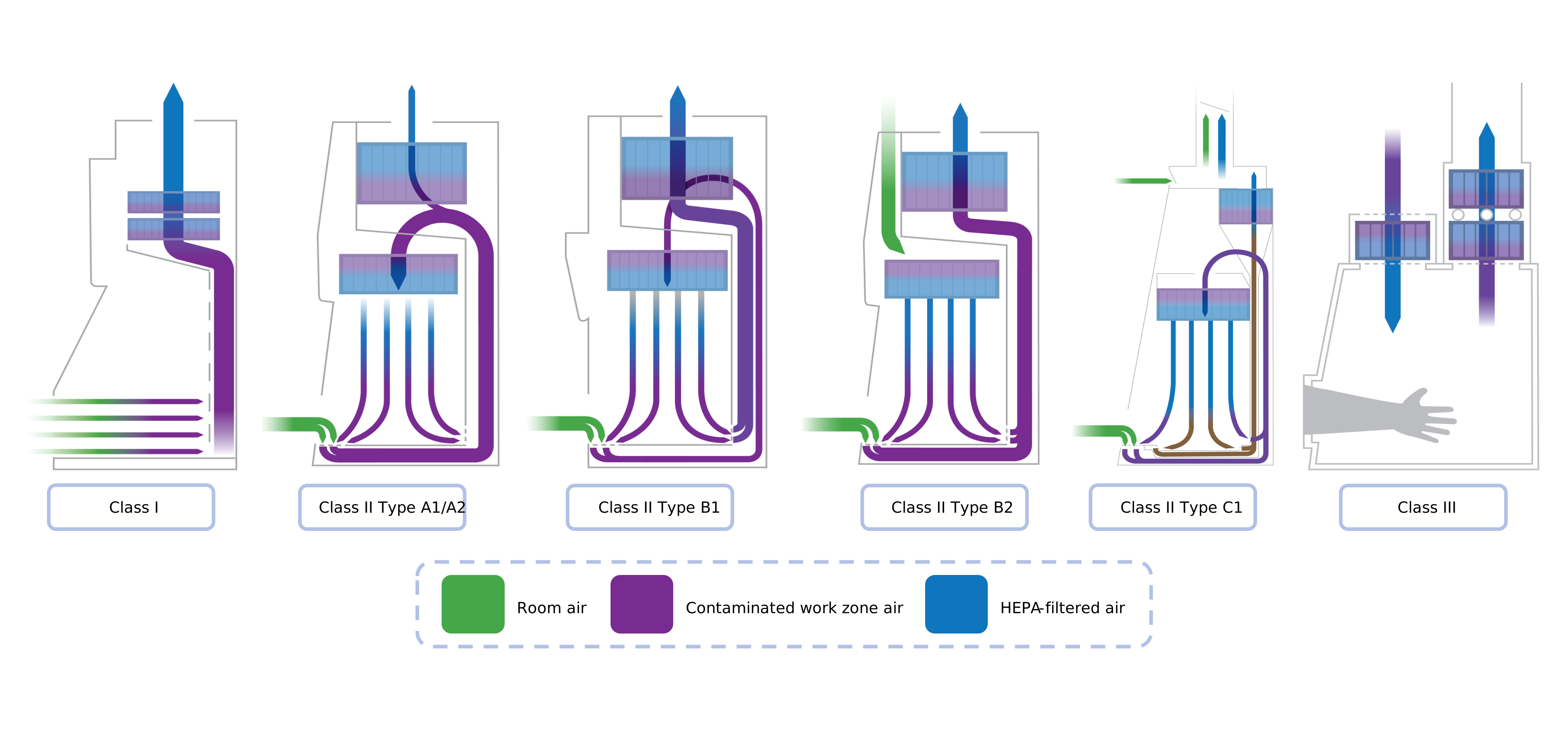
Class I

Class I BSCs provide personnel and environmental protection by pulling room air into the cabinet and across the work area. The air then passes through a HEPA filter before it’s exhausted. These cabinets are typically used for low to moderate-risk work where product sterility is not required.

Class II

Class II BSCs protect personnel, the environment, and the product by HEPA-filtering air before it reaches the work zone. The five types (A1, A2, B1, B2, C1) differ in airflow, exhaust requirements, and their suitability for work involving hazardous or volatile chemicals. Selection should be based on your risk assessment.

Class III

Class III cabinets provide maximum containment for highly hazardous work. These enclosures fully isolate the workspace, and all exhausted air passes through two HEPA filters or a HEPA filter followed by an air incinerator before release.

Configuring BSCs around your workflows

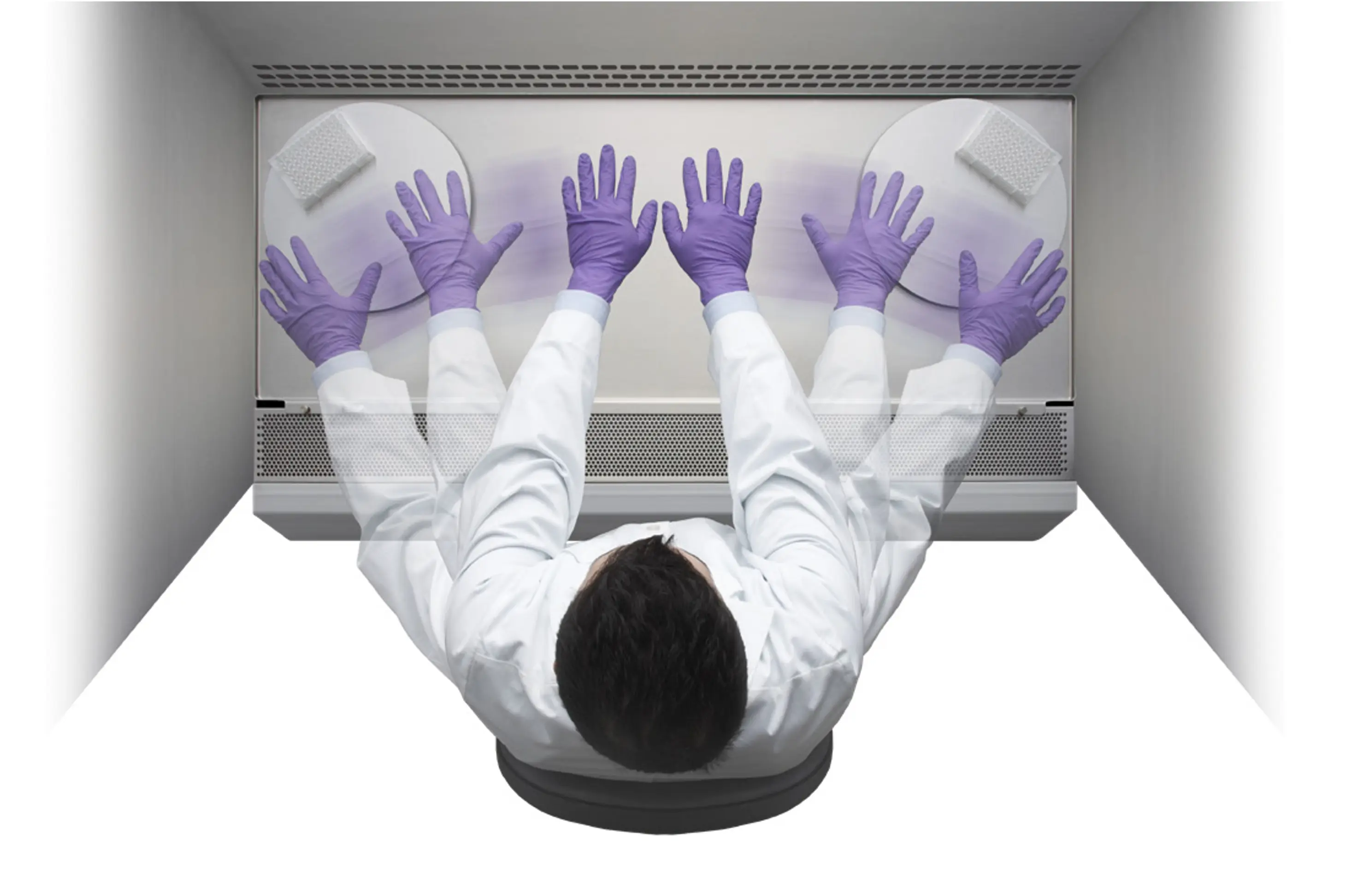
A workflow analysis helps ensure that a BSC supports efficiency and user comfort. This evaluation examines how work is performed inside the cabinet—how equipment is arranged, how often it’s accessed, and how users interact with the space.
Conducting a dry run of planned experiments on an open benchtop allows lab managers to visualize the cabinet’s footprint and optimize positioning before installation. Based on these observations, determine the necessary configuration, including cabinet size, placement of utilities and internal equipment, and any ergonomic features.
The following questions can help guide configuration decisions and ensure the BSC aligns with your lab’s workflows.
Is there sufficient lab space to accommodate the BSC’s footprint?
Will specific services (gas, air, vacuum, power) or connections to external equipment be required?
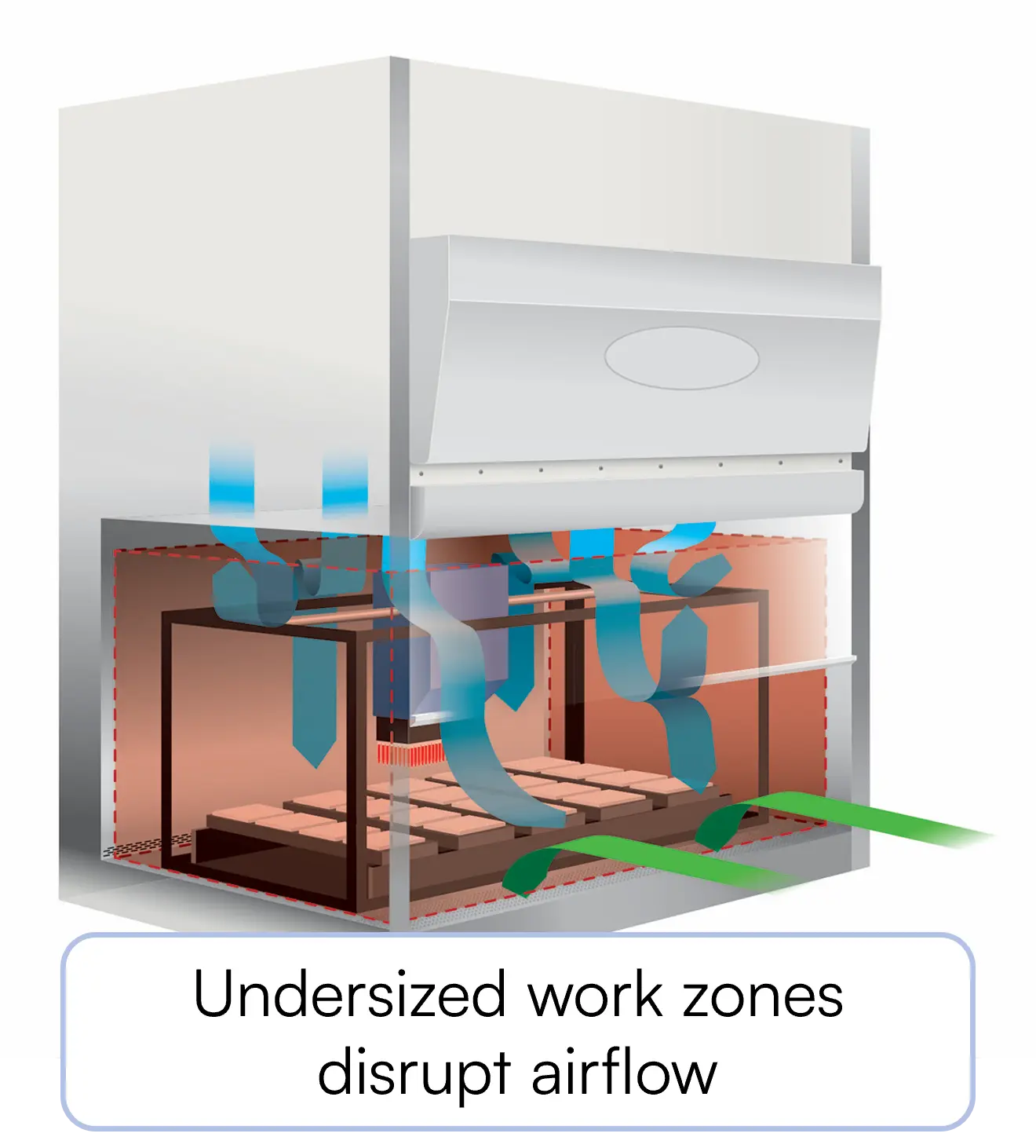
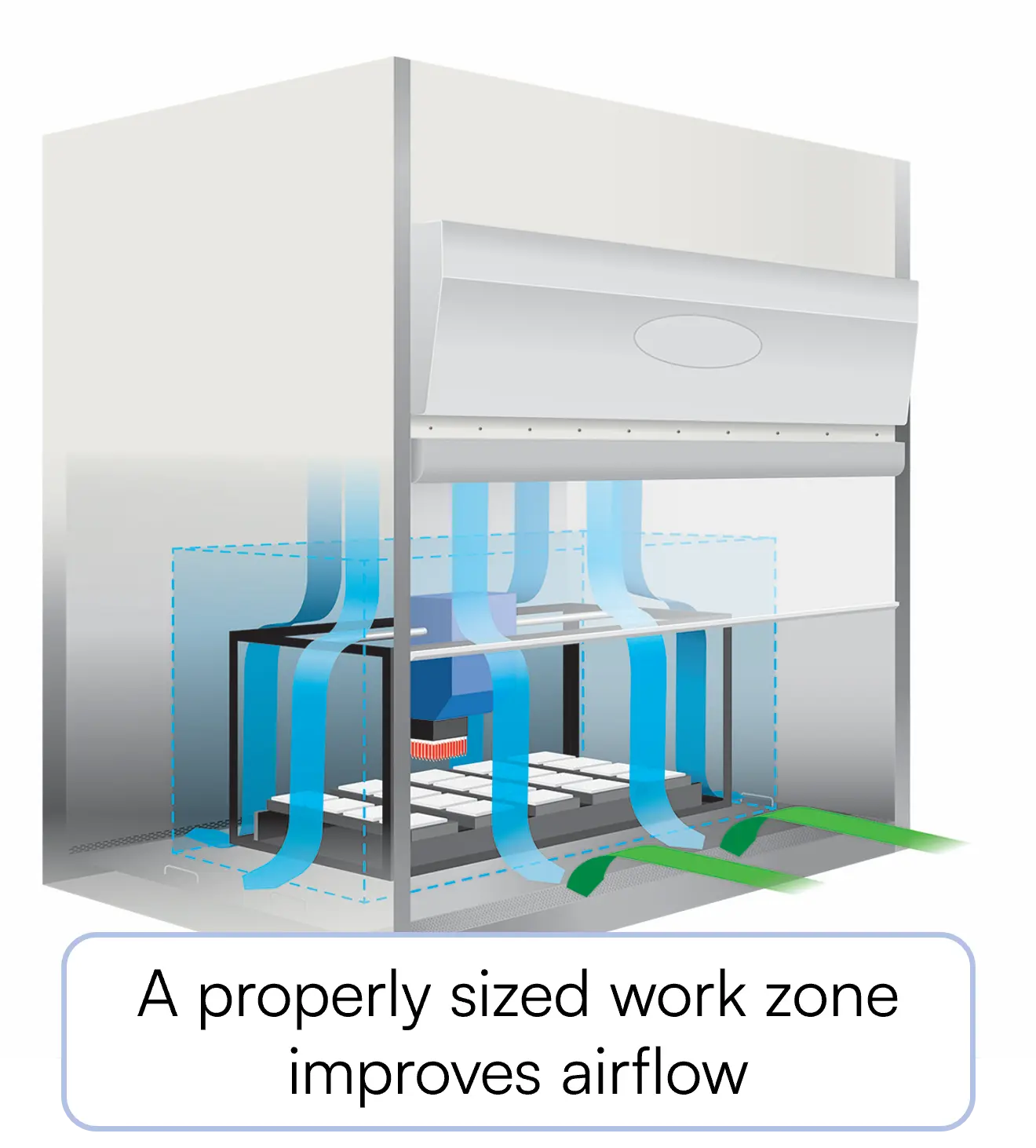
Will the planned equipment fit inside the BSC without overcrowding the workspace or disrupting airflow?
Will work be done seated, standing, or both, and is height adjustment needed for different users?
Can users easily reach all necessary equipment and supplies without strain or disrupting airflow?
Are ergonomic aids, such as footrests, arm and elbow rests, or turntables, needed?

Customizing a BSC

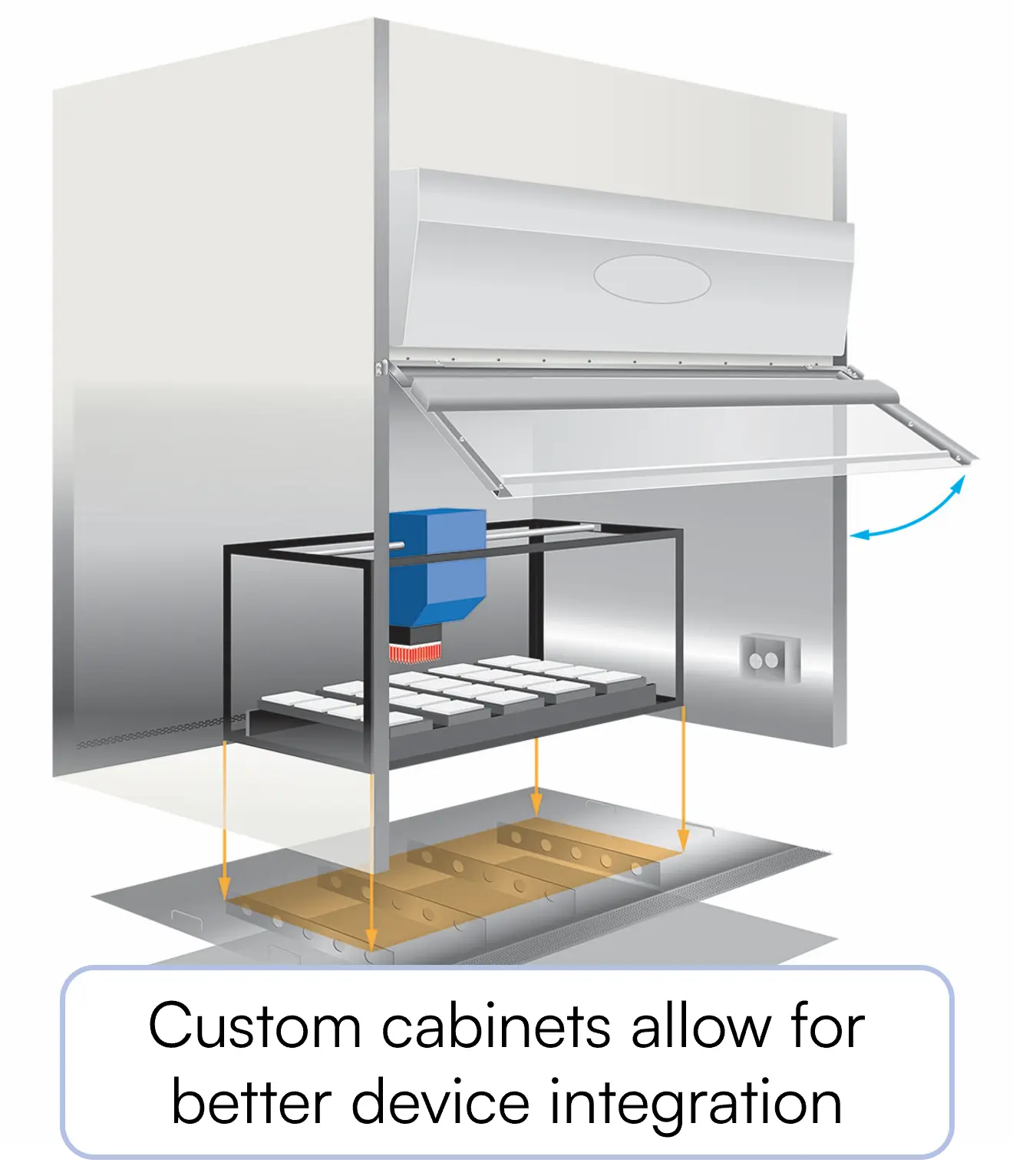
When large or awkwardly shaped instruments must be housed inside the cabinet, or when planned experiments demand unique features, a custom BSC may be necessary. In these cases, the cabinet is designed around your specific equipment and workflows, ensuring both ergonomic function and containment. Modifications may range from small adjustments, such as altered sashes or reinforced work surfaces, to fully bespoke designs built around a specific instrument.
The following considerations can help determine which design features are necessary for optimal protection and operation.
The size of the equipment and the space needed for experimental work, which determines the cabinet’s dimensions
The weight of the equipment, which may require a reinforced work surface or base
The vibration and temperature sensitivity of the instrument, which may require added stabilization or heating and cooling features
The utility and power requirements of the instrument, which influence the number, type, and placement of connections
The need to remove equipment, where frequent or cumbersome movement may require sliding or rolling work surfaces
The operational and maintenance requirements of the instrument, which may dictate the placement of access panels or openings
Integrating large or automated instruments into a BSC introduces challenges that standard enclosures aren’t built to handle. This video highlights why proper cabinet sizing is essential when housing larger instruments and how thoughtful enclosure design supports containment. 

For a deeper look at key design considerations, this article by Julianne Baron, PhD, outlines how to evaluate equipment and workflow needs and plan installation when designing a custom BSC for automated instruments.

Planning for installation

Select below to learn more

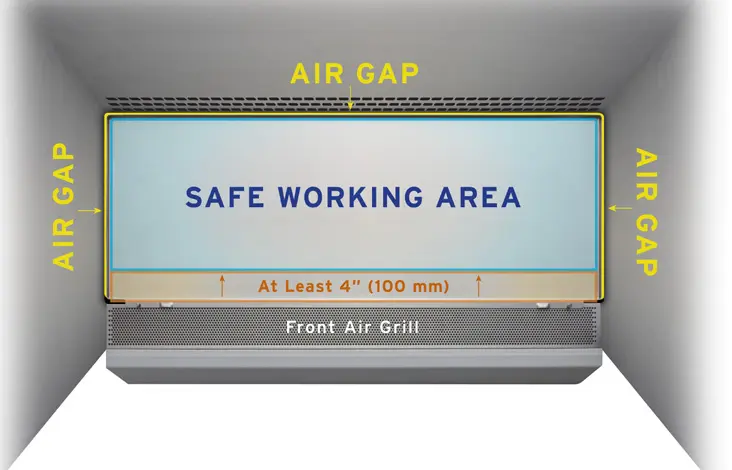
Clearance is needed above, behind, in front of, and on the sides of the cabinet to maintain proper airflow. Adequate space is also needed around the cabinet for maintenance access, as well as airflow and filter testing.
Position cabinets away from doors, windows, HVAC vents, fans, high-traffic areas, and other equipment that can interfere with airflow, such as chemical fume hoods. These can cause turbulence and disrupt containment.
Confirm that the facility has sufficient exhaust capacity for ducted or canopy-connected models, and adequate power for the cabinet and any integrated equipment. Verify voltage and amperage requirements, and ensure the unit is positioned near the necessary outlets and exhaust connections. 
After installation and before use, the BSC must be field certified by an accredited technician to verify proper containment and performance. Recertify annually or after relocation or any repairs.

References

Canadian Centre for Occupational Health and Safety. “Hazard and Risk - Hierarchy of Controls.” www.ccohs.ca/oshanswers/hsprograms/hazard/hierarchy_controls.html

Government of Canada. “Chapter 11 - Biological Safety Cabinets.” https://www.canada.ca/en/public-health/services/canadian-biosafety-standards-guidelines/handbook-second-edition/chapter-11-15.html

Julianne L. Baron. “Biosafety Cabinet Selection in the Context of Risk Assessment.” www.nuaire.com/resources/biosafety-cabinet-selection-in-the-context-of-risk-assessment-white-paper

Julianne L. Baron. “Biosafety Cabinet Risk Assessment.” www.nuaire.com/resources/biosafety-cabinet-risk-assessment

Julianne L. Baron. “Using Ergonomic and Workflow Analyses to Configure a Biosafety Cabinet.” www.nuaire.com/resources/using-ergonomic-and-workflow-analyses-to-configure-a-biosafety-cabinet

Julianne L. Baron. “Building a Custom Biosafety Cabinet.” www.nuaire.com/resources/building-a-custom-biosafety-cabinet-white-paper

Julianne L. Baron. “Biosafety Cabinet Installation Design Considerations.” www.nuaire.com/resources/biosafety-cabinet-installation-design-considerations

Julianne L. Baron. “The Need for Field Certification of Biosafety Cabinets.” www.nuaire.com/resources/need-for-field-certification-of-biosafety-cabinets

Looking for a biosafety cabinet that works with your lab? NuAire offers configurable and customizable solutions to support safety, efficiency, and your unique workflows.
Learn More